What actually happens to the articles you never read
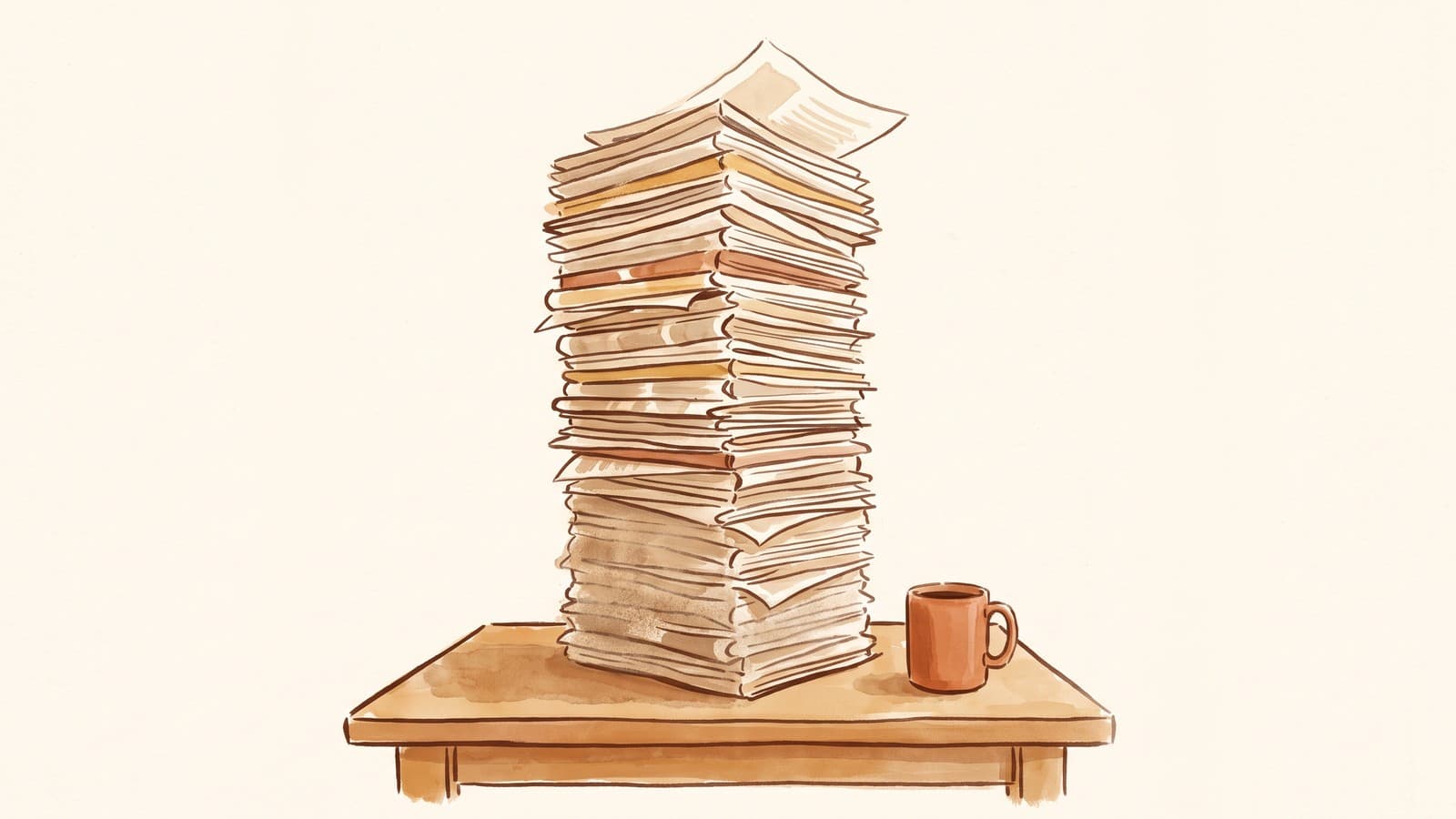
Open your read-later app and scroll to the bottom. The things down there were saved by someone who meant it. They were interesting enough to interrupt whatever you were doing, interesting enough to be worth a click and a moment of filing. And then nothing.
This is the normal state of a read-later library, not a personal failing. It is worth understanding why it happens, because the fix people usually reach for makes it worse.
Saving feels like progress, and that is the problem
The moment you save something, you get most of the emotional payoff of having read it. The decision is made, the thing is secured, the tab can close. Your attention is released and the anxiety of I should read this is discharged — not resolved, discharged.
That feeling is real and it is not fraudulent. You did do something: you made a judgement that this was worth your future time. But the judgement is the cheap half. The expensive half is the twenty minutes of attention you promised on behalf of a future version of yourself who has not been consulted.
That future self shows up with a different set of constraints. They are tired, or in a queue, or between two meetings with seven minutes and no appetite for a 4,000-word essay on distributed systems. The article was saved by someone with a full tank of curiosity and is being collected by someone running on fumes.
Sorting does not help
The instinct is to organize. Tags, folders, nested collections, a triage pass every Sunday where you decide what deserves to stay.
Organizing a backlog is genuinely satisfying, and it changes nothing about whether anything gets read. It is the same act as saving — a judgement made cheaply, deferring the expensive part — just performed a second time on the same items. A well-tagged library of unread articles is an unread library with better metadata.
Worse, triage adds a chore. Now there is a queue to process before you can read anything, and the queue grows faster than you clear it. Plenty of people abandon read-later apps at exactly this point, and conclude that they are bad at reading. They are not. They were handed a filing system when what they needed was a way to actually get through things.
The three honest answers
Strip away the features and there are only three real strategies for a backlog, and every product in this category is some mix of them.
Delete it. Declare backlog bankruptcy, clear the list, start again. This works, briefly, and it is more respectable than it sounds — most of what you saved was worth exactly one moment of interest and no more. The cost is that the few genuinely important things go into the bin alongside the rest.
Make it findable. Give up on reading the backlog as a queue and treat it as an archive: full-text search, semantic search, tags, so that when you need the thing about Postgres indexes you can find it. This is a real answer and for many people it is the right one. It moves the goal from read everything to retrieve anything, which is achievable. Cubox is the strongest version of this idea.
Bring it back to you. Instead of waiting for you to come to the library, have the library come to you — on a schedule, in a form that fits the moments you actually have free. Readwise does this with highlights and a daily review. FeedTalk does it with audio, in pieces short enough to fit the two minutes between other things.
There is no fourth answer, and any product promising one is selling you a filing cabinet.
Why the moments matter more than the method
The reason a backlog persists is not that you lack the will to read. It is that reading requires a specific kind of time — screen, hands, quiet, a clear stretch of attention — and that kind of time is the scarcest thing in most days.
Meanwhile the abundant time is the other kind: walking somewhere, waiting for coffee, on a train, doing the dishes. Hours of it a week. It is useless for reading and perfectly good for listening.
This is the bet FeedTalk makes, and it is worth stating as a bet rather than a fact: that a thirty-second spoken version of something you saved, played back in the time you already have, beats a full article you will never open. Not because listening is better than reading — it is not, and we say so — but because it happens.
What to do about your own backlog
Regardless of which tool you use:
- Stop treating the backlog as a debt. It is a record of what interested you, not a list of obligations. Most of it was never going to be read and that was always fine.
- Decide what the library is for. An archive you search, or a queue you work through. Both are legitimate; a library trying to be both becomes neither.
- Match the format to the time you actually have. If your free minutes are spent walking, a queue of long articles is not a plan.
- Stop saving things you already know you will not read. The save is a promise to your future self. Make fewer of them and keep more.
If you want to see how the main tools in this category differ on all this, we keep an honest comparison of four of them — including the rows where FeedTalk is the one marked "No".